Elkem Secures Enova Funding to Scale Biocarbon Use in Low-Carbon Silicon Production
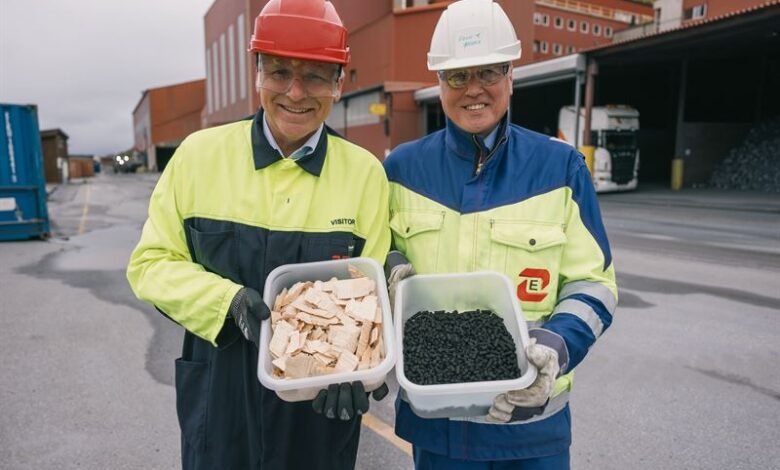
Elkem has been awarded NOK 87 million in funding from Enova to accelerate the development of industrial-scale biocarbon solutions, marking a significant step in efforts to decarbonise silicon production.
The project, with a total budget of NOK 242 million and running through 2028, aims to increase the share of renewable carbon used in Elkem’s Norwegian smelters. If successful, it could deliver emissions reductions of up to 0.5 million tonnes of CO₂ annually, addressing one of the most challenging aspects of heavy industry decarbonisation.
Carbon plays a critical role in the production of silicon, acting as a reducing agent in high-temperature furnaces that convert quartz into usable material. Traditionally, this process relies on fossil-based coal. Elkem has been working to replace this with biocarbon derived from renewable sources such as charcoal, wood chips, and forestry by-products, but scaling its use remains technically complex.
Currently, biocarbon accounts for around a quarter of the carbon input across Elkem’s Norwegian operations. The company aims to double this share by 2030, a goal that requires the development of new biocarbon materials capable of withstanding the extreme conditions of industrial furnaces while maintaining efficiency and safety.
The Enova-backed programme will focus on testing a range of biomass feedstocks sourced from different suppliers, including emerging Norwegian producers. Research and development will span laboratory analysis, pilot-scale trials, and full industrial testing across Elkem’s five smelting facilities. In parallel, the project will address logistical and operational challenges, such as safe handling and consistent performance of biocarbon at scale.
Beyond its direct emissions impact, the initiative could help establish a more robust and competitive supply chain for industrial biocarbon, both in Norway and internationally. Industry estimates suggest that replacing half of the fossil carbon used in global silicon and ferrosilicon production with biocarbon could reduce emissions by more than 20 million tonnes of CO₂ each year.
The project forms part of Elkem’s broader climate strategy, which targets net-zero emissions by 2050. The company has also emphasised the importance of sustainable sourcing, requiring that all biocarbon inputs are certified or traceable to responsibly managed forestry, reflecting growing scrutiny over supply chain integrity in low-carbon materials.
As industries reliant on high-temperature processes seek viable pathways to reduce emissions, biocarbon is emerging as a key solution—offering a renewable alternative to fossil inputs without fundamentally altering production methods.