Asia-Pacific Bets on CCUS Hubs to Decarbonise Heavy Industry
The race to decarbonise heavy industry is entering a more coordinated—and arguably more realistic—phase. A newly released study led by Hatch Ltd and a global consortium of industrial players suggests that the future of carbon capture may not lie in isolated projects, but in shared regional infrastructure designed to scale.
At the centre of this shift is the concept of Carbon Capture, Utilisation and Storage (CCUS) hubs—large, integrated systems that capture carbon dioxide from multiple industrial sources, transport it, and either reuse or permanently store it underground. These hubs are now being explored across the Asia-Pacific region as a practical solution for sectors that are notoriously difficult to decarbonise, such as steel, cement, and chemicals.
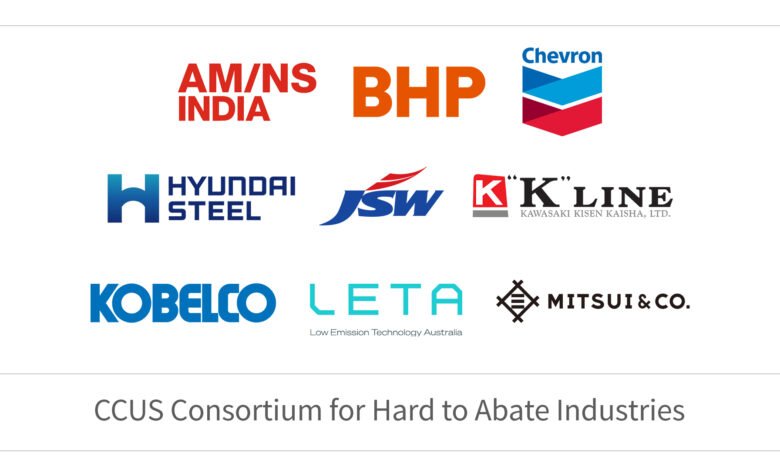
The study, backed by major industrial names including BHP, Chevron, and Mitsui & Co., has completed its first phase by narrowing more than 3,000 potential sites down to five promising hub locations. These are spread across India, Indonesia, Malaysia, and Australia—regions that combine industrial demand, geological storage potential, and emerging policy frameworks.
What makes this development noteworthy is not just the scale, but the logic behind it. Instead of each factory or plant building its own carbon capture system and storage solution—a costly and often inefficient approach—CCUS hubs aim to aggregate emissions from multiple sources. This allows industries to share pipelines, shipping infrastructure, and storage facilities, significantly reducing costs and improving feasibility.
For industries like steelmaking, this model could be transformative. Steel production alone accounts for roughly 7–9% of global CO₂ emissions, and unlike power generation, it cannot easily switch to renewable electricity. This is why companies such as Kobe Steel and Hyundai Steel Company have joined the initiative—recognising that carbon capture may be one of the few viable pathways to deep emissions cuts in the near term.
The inclusion of Kawasaki Kisen Kaisha—better known as “K” LINE—also highlights another critical piece of the puzzle: transport. Captured CO₂ must be moved from industrial sites to storage locations, often across long distances. Shipping, particularly in liquefied CO₂ form, is emerging as a key enabler of this value chain, especially in regions where pipeline networks are underdeveloped.
But while the technical feasibility of CCUS is increasingly clear, the study underscores a more stubborn challenge: economics and policy. The findings emphasise that none of these hubs will become commercially viable without strong government support, clear regulatory frameworks, and targeted incentives. Carbon capture remains expensive, and without a price on carbon or financial support mechanisms, many projects struggle to compete with conventional operations.
This is where the second phase of the study becomes critical. Moving beyond site selection, the next stage will focus on detailed engineering, commercial models, and regulatory analysis. In essence, it aims to answer the question that has long haunted CCUS: not “can it work?” but “can it work at scale, and who will pay for it?”
The broader significance of this initiative lies in its timing. Across Asia, industrial demand continues to grow rapidly, driven by urbanisation and economic development. At the same time, governments and companies are committing to net-zero targets, creating a tension between growth and sustainability. CCUS hubs offer a potential bridge—allowing existing industries to reduce emissions without requiring an immediate and complete overhaul of production systems.
There are also strategic implications. By developing regional CCUS infrastructure, countries can position themselves as carbon management hubs, attracting investment and creating new value chains around CO₂ transport, storage, and utilisation. For example, captured carbon can be used in synthetic fuels, construction materials, or even as a feedstock for chemical processes, turning what was once waste into a potential economic resource.
However, it would be a mistake to view CCUS as a silver bullet. Critics argue that it risks prolonging the life of fossil fuel-based industries and diverting attention from cleaner alternatives such as electrification and renewable energy. Even proponents acknowledge that carbon capture should complement—not replace—other decarbonisation strategies.
What the Asia-Pacific CCUS Hub Study ultimately demonstrates is a shift in mindset. The conversation is moving away from isolated pilot projects and toward system-level solutions that integrate technology, infrastructure, and policy. It reflects a growing recognition that achieving net zero will require not just innovation, but coordination across industries and borders.
As the study enters its next phase, the real test will be whether this collaboration can translate into tangible projects on the ground. If successful, these hubs could become a blueprint for industrial decarbonisation—not just in Asia, but globally.
For now, they represent something that has often been missing in the climate transition: a credible pathway for the world’s most emissions-intensive sectors to move from ambition to action.