Japan advances CO₂ capture technology with successful MOF-based pilot test
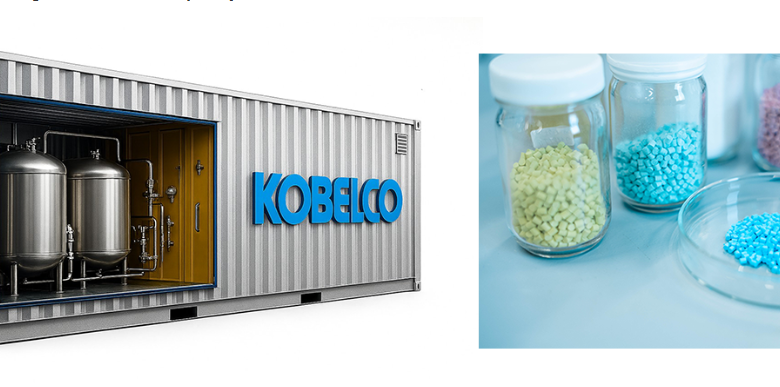
Japanese industrial companies Kobe Steel (Kobelco), Atomis, and Nagase & Co. have completed a demonstration test of a new carbon capture technology using metal-organic frameworks (MOFs), marking a step forward in efforts to develop more efficient industrial-scale CO₂ removal systems.
The companies announced on 16 April 2026 that they had successfully operated a pilot CO₂ capture device capable of capturing around 30 kilograms of carbon dioxide per day. The system uses a pressure swing adsorption (PSA) process combined with MOF materials, which selectively capture CO₂ from industrial exhaust gases.
MOFs are highly porous materials made from metal ions and organic molecules. Their structure allows them to trap specific gases at the molecular level, and they are increasingly being explored for applications in gas separation, storage, and carbon capture.
The companies said the results of the pilot test demonstrate the technical feasibility of the approach and have encouraged plans for a larger demonstration at the metric-ton scale, which would represent Japan’s first attempt to scale MOF-based CO₂ capture toward industrial deployment.
The test was conducted at Kobe Steel’s Takasago Works in Hyogo Prefecture, a facility designated as a green transformation demonstration site. The system was evaluated using exhaust gases generated from city gas combustion, with a focus on capture efficiency, gas purity, and operational stability.
A key advantage of the MOF-based system is its ability to simplify the CO₂ capture process compared to conventional technologies. Traditional systems often rely on materials such as zeolites and require extensive pre-treatment of exhaust gases to remove moisture and other impurities. According to the developers, the MOF system can directly handle lower-concentration CO₂ streams while reducing energy consumption and equipment size.
This feature is seen as particularly important for industrial decarbonisation, where emissions come from a wide range of sources including boilers, furnaces, and chemical processes. Many of these sources produce mixed gas streams, making carbon capture more complex and costly.
The companies involved say the technology could help address Scope 1 emissions—direct emissions from industrial facilities—which remain one of the most difficult categories to decarbonise. By enabling capture at smaller scale and potentially lower energy cost, MOF-based systems could expand the range of facilities capable of deploying carbon capture technology.
Beyond technical performance, the project also reflects Japan’s broader push to commercialise carbon capture, utilisation, and storage (CCUS) technologies as part of its long-term climate strategy. The government has positioned CCUS alongside hydrogen, ammonia, and renewable energy as key pillars of its carbon neutrality roadmap.
If scaled successfully, the captured CO₂ could be used in a variety of applications, including industrial feedstocks and dry ice production, or potentially stored for long-term sequestration. The companies involved also highlighted the possibility of creating a domestic CO₂ supply chain, reducing reliance on imported carbon-based resources.
Industry observers say the move toward smaller, modular capture systems could be important for expanding adoption. Large-scale carbon capture projects have often been constrained by high capital costs, energy requirements, and infrastructure limitations for CO₂ transport and storage. Technologies that reduce system size and improve efficiency may help lower these barriers.
The demonstration also reflects growing collaboration between materials science, heavy industry, and trading companies in Japan’s decarbonisation efforts. Atomis is responsible for developing the MOF materials, Kobe Steel is leading the engineering and system design, and Nagase & Co. is supporting commercialisation and market deployment.
The next phase of development will focus on scaling the system to handle ton-level CO₂ capture, which is considered a critical step toward industrial viability. Researchers will also assess performance stability, energy efficiency, and integration with existing industrial facilities.
While still in early-stage development, the project highlights increasing momentum in carbon capture innovation globally. As climate policies tighten and industries face rising pressure to reduce emissions, technologies such as MOFs are being closely watched for their potential to make carbon capture more practical, flexible, and widely deployable.