EWE Awards Bilfinger Key Contract for Emden Hydrogen Plant
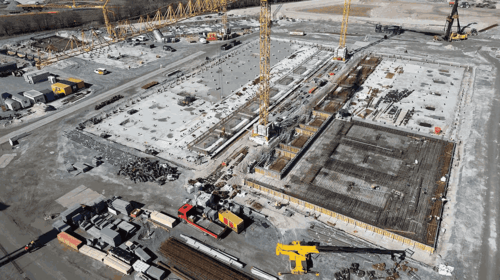
EWE has awarded a major contract to Bilfinger for steelwork, piping and component installation at its 320-megawatt hydrogen production plant in Emden, marking another significant step in the development of Germany’s hydrogen economy.
The contract forms part of EWE’s “Clean Hydrogen Coastline” project and represents the final major package following previous agreements covering electrolysis systems, compressors and construction works. The Emden facility is expected to become one of the largest green hydrogen production plants in Europe, with first deliveries to industrial customers targeted for late 2027.
Under the agreement, Bilfinger will oversee detailed engineering, delivery, installation and commissioning of key balance-of-plant infrastructure surrounding the electrolysis process. This includes several kilometres of piping systems linking plant sections, steel construction work and the integration of auxiliary technical facilities.
EWE said the contract award establishes the final cost and planning parameters for the project, enabling the company to advance negotiations on long-term green hydrogen supply agreements with industrial customers. The company confirmed it is already in discussions with several potential partners as it seeks to build commercially viable supply relationships.
Tobias Moldenhauer said the completion of the final major construction contracts represented an important transition from project development to market implementation.
He said the company now had the foundation required to offer competitive, long-term green hydrogen supply agreements, adding that the project was a key milestone in the wider market ramp-up for hydrogen in Germany.
The Emden hydrogen plant forms part of the European IPCEI-backed “Clean Hydrogen Coastline” initiative, which aims to connect production, storage, transport and delivery infrastructure across Lower Saxony. EWE said the integrated system is intended to support industrial demand for climate-neutral energy while creating new regional economic opportunities.
Despite progress, the company warned that continued investment in hydrogen projects remains dependent on stable regulatory frameworks and supportive market conditions at both German and European level.
Moldenhauer said recent developments, including proposed revisions to additionality criteria and progress on greenhouse gas quota mechanisms, were positive signals for the sector. However, he stressed that further action would be needed to ensure hydrogen projects remain internationally competitive and economically viable.
Thomas Schulz said the partnership demonstrated the importance of industrial collaboration in accelerating Germany’s hydrogen transition. He added that Bilfinger’s experience across the hydrogen value chain would support the development of sustainable energy infrastructure for the future.
The “Clean Hydrogen Coastline” project is funded under the European Union’s Important Projects of Common European Interest programme, with support from the EU, the German federal government and the state of Lower Saxony.
The award of the final major contract package suggests EWE’s Emden project is moving beyond planning and into a commercially meaningful phase. Securing defined project costs is particularly important in the hydrogen sector, where financing and long-term offtake certainty remain major hurdles. If EWE succeeds in converting current industrial discussions into binding supply agreements, the project could become a benchmark for large-scale hydrogen commercialisation in Germany and wider Europe.