JCB Targets Hydrogen Speed Record
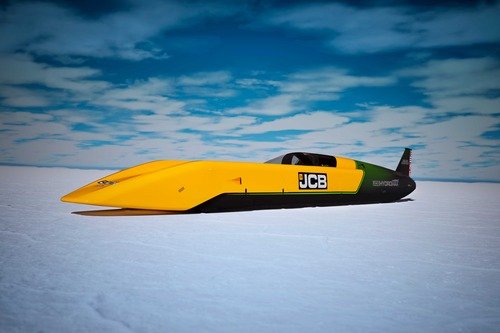
British engineering giant JCB is preparing to return to the Bonneville Salt Flats in Utah with a new mission: setting a hydrogen-powered land speed record using its own hydrogen internal combustion engines.
The company has unveiled the “JCB Hydromax”, a 32-foot streamliner powered by twin production-based hydrogen engines delivering a combined 1,600 bhp. The project marks the next chapter in JCB’s long-running effort to demonstrate the commercial potential of hydrogen combustion technology, following more than £100 million invested over five years into hydrogen engine development.
The initiative comes exactly two decades after the company made headlines with the diesel-powered “JCB Dieselmax”, which achieved a world diesel land speed record of 350.092 mph in 2006 — a figure that still stands today. Once again, former Royal Air Force pilot and record-breaking driver Andy Green will take the wheel for the new attempt.
JCB Chairman Anthony Bamford said the project is designed to showcase both British engineering capabilities and the durability of hydrogen combustion technology.
The company believes hydrogen internal combustion engines could play a major role in decarbonising heavy-duty machinery and transport applications where battery-electric solutions remain challenging. JCB has already begun producing hydrogen-powered construction equipment, including diggers, using the technology developed through the programme.
Testing of the Hydromax vehicle will begin in the UK before the team heads to Bonneville SpeedWeek in August, where competitors from around the world gather to pursue official land speed records. JCB will first attempt records under Southern California Timing Association rules before pursuing internationally recognised records governed by the Fédération Internationale de l’Automobile (FIA).
The hydrogen-powered vehicle is expected to outperform its diesel predecessor, with JCB openly targeting speeds beyond 350 mph.
The project also comes as the company expands its manufacturing footprint in North America, ahead of the opening of a new $500 million factory in San Antonio, Texas, which will manufacture machines for the US market.
H2 Bulletin View: JCB’s decision to use hydrogen combustion rather than fuel cells reflects a growing split within the hydrogen mobility sector. While fuel cells dominate passenger vehicle discussions, internal combustion engines are increasingly being positioned as a practical near-term solution for heavy machinery and off-road equipment because they can leverage existing engine platforms, supply chains, and maintenance expertise. The Hydromax project is as much an industrial statement as it is a speed record attempt — aimed at proving hydrogen ICE technology can deliver performance, reliability, and commercial viability in sectors where electrification remains difficult.